
Contents
Why Planning Feels Draining Before Anything HappensThe Hidden Rule That Slows Everything DownPlanning That Leads to Action Looks DifferentPrinciple 1: Shrink the Plan Until It’s FinishablePrinciple 2: Plan Only What You’ll Actually CompletePrinciple 3: Replace Decisions With SequenceWhy Sequence-Based Planning Works Better in JanuaryHow Routinery Helps This Kind of PlanningA Different Definition of “Good Planning”A Lighter Way to Begin the YearNew Year planning is supposed to help. It’s supposed to make the year feel less chaotic and more intentional. But for a lot of people, planning in early January doesn’t create momentum. It creates a strange kind of fatigue — the kind that shows up before anything even happens.
The problem isn’t that planning is pointless. The problem is that most New Year planning is built like a final exam. It asks for clarity, confidence, and commitment up front. And if the plan isn’t complete, it quietly suggests you shouldn’t start yet.
That single idea drains more energy than most people notice.
Why Planning Feels Draining Before Anything Happens
Planning becomes exhausting when it turns into decision-making. Not the useful kind — the endless kind. The kind that asks you to define your priorities for the whole year while you’re still trying to get back into a normal sleep schedule. The kind that encourages a “perfect” plan, then punishes you with doubt every time the plan changes.
Early January is a rough time for that. Work is restarting. Routines have been disrupted. Energy is often lower than expected. So when planning becomes a large, open-ended project, it doesn’t feel like preparation. It feels like one more thing you’re failing to finish.
And then something predictable happens: action gets delayed.
The Hidden Rule That Slows Everything Down
A lot of New Year planning runs on an unspoken rule:
“I’ll start once the plan feels complete.”
It sounds reasonable. It even sounds responsible. But it turns planning into a gatekeeper. Starting becomes something you earn after the plan is tidy enough, detailed enough, and future-proof enough.
That’s where the energy leak begins.
Because the plan never really feels complete. January shifts fast. Schedules change. Motivation changes. Life interrupts. So instead of beginning, you keep adjusting. Goals get rewritten. Lists get reorganized. Systems get swapped out. Planning starts to resemble procrastination, except it’s “productive” procrastination, which is harder to notice and harder to stop.
If planning delays action, it’s working against you.
Planning That Leads to Action Looks Different
The fix isn’t “plan less” in a vague, moralistic way. The fix is more specific than that: plan in a way that makes action easier, not later.
Action-friendly planning does three things well:
-
It shrinks until it becomes finishable.
-
It only includes what you’ll actually complete.
-
It replaces repeated decisions with a simple sequence.
That kind of planning doesn’t try to clarify everything. It tries to remove the hesitation that happens right before you start.
Principle 1: Shrink the Plan Until It’s Finishable
Most New Year planning fails because it starts too large. “This year, I’ll change my life” is an emotional statement, not a workable plan. Even “this month, I’ll rebuild my routine” can be too big in early January.
Finishable planning has one rule: the plan must be small enough to complete without waiting for the perfect day.
A finishable plan might look like:
-
“Ten minutes of movement after coffee.”
-
“One focused work block before checking messages.”
-
“A five-minute reset before bed.”
These are not inspiring on purpose. They are doable on purpose. And the moment something is finishable, it becomes startable. That’s the whole point.
If your plan takes a full hour just to set up, it’s already too expensive. If it requires a perfect morning, it’s already too fragile.
Shrink it until it fits inside the day you actually have.
Principle 2: Plan Only What You’ll Actually Complete
New Year planning often creates an “ideal day.” The problem is that ideal days don’t show up consistently in January. Energy is uneven. Meetings return. People catch up on things they postponed in December. Weather can affect sleep and mood. Real life re-enters fast.
Action-friendly planning doesn’t ask, “What would be the best version of my day?” It asks something more useful:
“What will still happen even on a messy day?”
That’s a different standard. It’s honest. It’s also far more effective.
Planning only what you’ll actually complete is not about lowering expectations. It’s about removing the constant sense of failure that comes from stacking unrealistic commitments. When you plan 12 things and complete 3, your brain learns a bad lesson: planning is a reminder of what you didn’t do.
When you plan 3 things and complete 3, you get a different lesson: the plan is trustworthy. Trust builds repetition. Repetition builds a routine.
If New Year planning keeps draining you, it may be because your plan is full of tasks you don’t truly intend to complete. Not because you’re dishonest — but because planning is often treated like a wishlist.
Turn it into a contract with reality.
Principle 3: Replace Decisions With Sequence
Even “realistic” plans can stall if they still require too many choices during the day.
A list is not a sequence. A list is a pile of options. And options create friction.
When people say they “didn’t have time,” they often mean something else: they didn’t have the mental bandwidth to decide where to start. They kept switching. They hesitated. They opened the plan, stared at it, and closed it.
Sequence-based planning fixes that by making one thing lead to the next.
Instead of:
-
workout
-
shower
-
breakfast
-
email
-
deep work
It becomes:
coffee → 10-minute movement → shower → breakfast → start the first work block
That “coffee” isn’t just a habit. It’s the trigger. The first step creates the second step. The second step creates the third. The plan stops feeling like a set of decisions and starts feeling like a flow.
This is one of the easiest ways to make New Year planning less draining: stop planning goals, and start planning transitions.
Because transitions are where people get stuck.
Why Sequence-Based Planning Works Better in January
January is not the best month for high-level strategy. Not because people are incapable, but because the month is unstable. Energy fluctuates. Sleep is inconsistent. Schedules shift. Social obligations change. Even the weather can affect mood and focus.
In that environment, planning that requires constant judgment will fail. It will feel heavy. It will trigger self-criticism. It will be abandoned.
Sequence-based planning survives because it doesn’t depend on perfect clarity. It depends on the next step being obvious. It reduces the number of times you have to “decide yourself into action.”
January doesn’t reward complexity. It rewards momentum.
And momentum usually comes from a short, repeatable sequence that still works when everything else feels slightly off.
How Routinery Helps This Kind of Planning
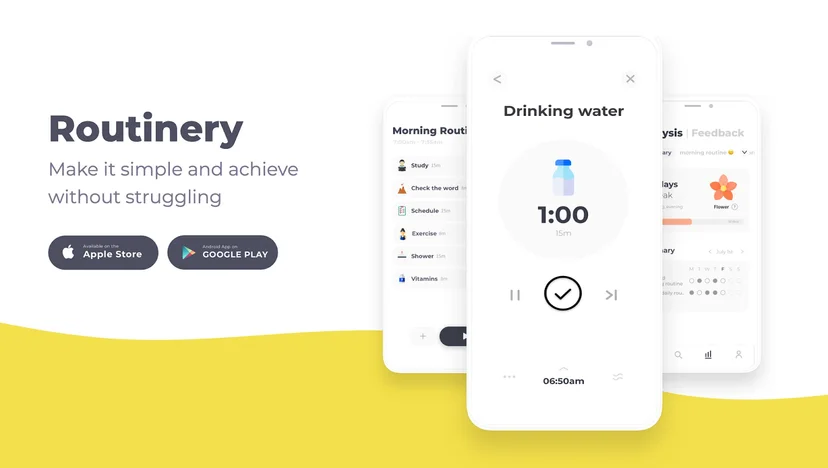
Routinery can be a way to make action-friendly planning easier to maintain
This is where Routinery can be genuinely useful — not as another planning system, but as a way to make action-friendly planning easier to maintain.
Routinery is built around the exact planning shifts that reduce draining:
-
Finishable planning: routines can be made small on purpose, not “ambitious by default.”
-
Realistic planning: you can build a version of your day that fits your actual life, not an ideal one.
-
Sequence-based planning: you set a clear order so you don’t have to decide what comes next.
Most importantly, it removes a specific failure point of New Year planning: the moment when the plan exists, but action doesn’t begin. When routines are turned into a sequence with a timer, the day stops asking, “What now?” It simply moves you to the next step.
That might sound small. In January, it isn’t. In January, reducing decisions is often the difference between starting and stalling.
A Different Definition of “Good Planning”
Good planning is not the kind that looks impressive on a page. It’s not the kind that covers every category of life. It’s not the kind that feels complete before anything happens.
Good planning is planning that makes it easier to start early.
If your plan delays action until you’re ready, it will keep draining you. Because readiness is rare in early January. The better goal is not to feel perfectly ready — it’s to make the plan light enough that readiness isn’t required.
Shrink it until it’s finishable. Plan only what you’ll actually complete. Turn tasks into a sequence where one step triggers the next.
That’s how New Year planning stops being a drain and becomes support.
A Lighter Way to Begin the Year
If New Year planning is draining you before you even start, that feeling isn’t proof you’re failing. It’s a signal that your planning method is asking for too much, too early.
January doesn’t need a perfect plan. It needs a workable one. A plan that doesn’t demand clarity before action. A plan that makes the next step obvious.
And if you want a tool that helps you keep that kind of planning consistent — the kind that turns into action — Routinery is designed to support exactly that shift: from planning that drains you to structure that helps you move.
Turn this into a daily routine with Routinery.
Step-by-step timers and cues that make routines stick.
Build a simple daily flow with Routinery →