Contents
What Is Decision Overload (Decision Fatigue)?Why Decision Overload Feels So BadSigns You Might Be Dealing With Decision OverloadWhat Causes Decision Overload?The Real Problem Isn’t “Too Much To Do” — It’s Too Many “What Now?” MomentsWhy Routines Help (Even If You’re Not a “Routine Person”)The Goal Isn’t to Do More. It’s to Decide Less.3 Tiny Ways to Reduce Decision Overload Starting TodayA Practical Way to Reduce DecisionsA Lighter Day Starts With Fewer DecisionsIf you’ve ever ended a normal day feeling like your brain ran a marathon, you’re not alone.
Sometimes it’s not even the big stuff that drains you.
It’s the small choices you keep making — all day long:
-
What should I eat?
-
Should I reply now or later?
-
What’s the most important thing today?
-
Am I doing enough?
-
Why do I feel behind?
That state has a name:
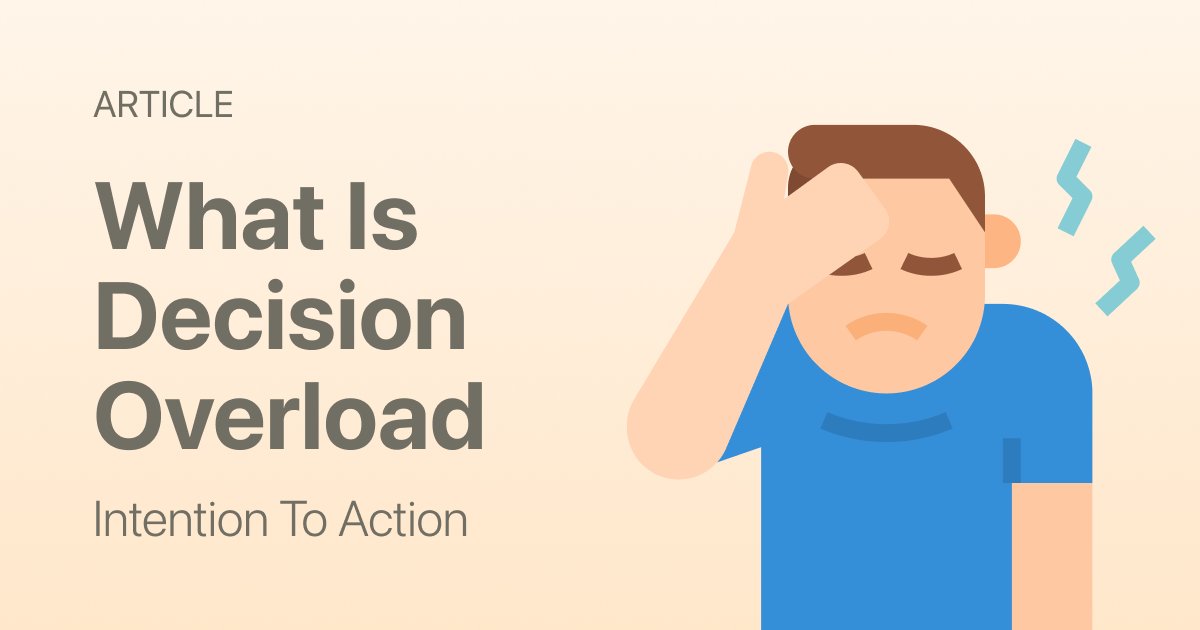
decision overload (often called decision fatigue).
And no — it doesn’t mean you’re weak.
It means your brain is doing too much invisible work.
In this article, you’ll learn:
-
what decision overload is
-
why it makes you feel exhausted
-
and how routines can make life feel lighter again
What Is Decision Overload (Decision Fatigue)?
Decision overload is what happens when you make so many choices — big and small — that your mental energy starts to break down.
It often shows up as:
-
overwhelm
-
procrastination
-
irritability
-
brain fog
-
feeling “stuck”
-
scrolling instead of starting
-
choosing comfort because thinking feels heavy
And the tricky part is this:
You can feel exhausted even if you didn’t do anything “hard.”
Because decisions are work.
Why Decision Overload Feels So Bad
Decision overload creates a specific kind of exhaustion:
You feel like you need to act…
but your brain can’t pick a direction.
That’s why people spiral into:
-
avoidance (“I’ll do it later”)
-
distraction (doomscrolling, snacks, random chores)
-
self-blame (“Why am I like this?”)
But the problem isn’t your personality.
The problem is that your brain is carrying too many open loops.
Signs You Might Be Dealing With Decision Overload
Here are some common signs:
1) You feel tired before the day even starts
Even mornings feel like pressure.
2) Simple tasks feel weirdly hard
You know what to do… but you can’t start.
3) You keep switching between tasks
You touch everything but finish nothing.
4) You feel a constant mental “buzz”
Like your brain is running in the background.
5) You default to the easiest option
Scrolling, snacking, avoiding, sleeping.
Again — this is not laziness.
It’s overload.
What Causes Decision Overload?
Decision overload builds up faster when you have:
-
too many tasks competing for attention
-
too many options (food, plans, priorities, apps)
-
too much input (messages, notifications, news)
-
an unpredictable schedule
-
emotional stress and mental pressure
-
caregiving responsibilities
-
lack of sleep
-
constant context switching at work
In modern life, decisions never stop.
So the real question becomes:
How do you protect your brain from constantly having to choose?
The Real Problem Isn’t “Too Much To Do” — It’s Too Many “What Now?” Moments
When your brain keeps asking:
-
“What should I do first?”
-
“What matters most?”
-
“How long will this take?”
-
“Should I start now or later?”
…it burns energy before you even begin.
That’s why decision overload often looks like procrastination.
Not because you don’t care —
but because your brain is negotiating too much.
Why Routines Help (Even If You’re Not a “Routine Person”)
A routine isn’t a rigid lifestyle rule.
A routine is simply a system that answers this question for you:
“What do I do next?”
When you have a routine, you remove dozens of small decisions.
And those small decisions are often what make life feel heavy.
Routines help because they:
-
reduce mental load
-
create predictability
-
protect energy
-
help you start without negotiating
-
reduce the feeling of being “behind” all the time
The best part?
A routine doesn’t need motivation.
It just needs a starting cue.
The Goal Isn’t to Do More. It’s to Decide Less.
Most productivity advice focuses on doing more.
But decision overload requires a different mindset:
You don’t need a better life plan.
You need fewer moments of:
“What now?”
That’s the real benefit of routines.
3 Tiny Ways to Reduce Decision Overload Starting Today
You don’t need a perfect lifestyle reset.
Start with these:
1) Pre-decide one repeatable default
Pick one “default” for things you overthink:
-
the same breakfast
-
the same work start routine
-
the same 5-minute reset
-
the same wind-down step
Less variety = less decision fatigue.
2) Turn “a task” into “the next step”
Instead of: “work on project”
Write: “open doc and write 3 bullets.”
Your brain can start a step faster than it can start a vague goal.
3) Use a short routine as your reset button
Even a 3–8 minute routine helps your nervous system downshift because the steps are already chosen.
A Practical Way to Reduce Decisions
Decision overload gets worse when you constantly have to decide:
-
what to do
-
when to do it
-
how long it should take
-
what comes next
Routinery helps reduce decision fatigue by turning your routine into a guided sequence:
step-by-step, timed, and easy to adjust when life changes.
Instead of thinking:
“I need to fix my whole life,”
you focus on one thing:
the step you’re doing right now.
And if your day changes, you can shorten your routine, skip steps, or edit it anytime.
That flexibility matters — because real life is never perfect.
A Lighter Day Starts With Fewer Decisions
Even if you don’t change everything today, you can change one moment.
One decision. One next step.
Because the goal isn’t to become “more disciplined” overnight — it’s to make life feel lighter by deciding less.
So if decision overload has been making you feel stuck, try this:
pick one small routine and let it carry you for a few minutes. That’s often enough to get your brain moving again.
And if you want an easier way to follow through, Routinery can help you turn that routine into something you don’t have to think about — just start.
Turn this into a daily routine with Routinery.
Step-by-step timers and cues that make routines stick.
Download Routinery — Try It Free for 7 Days →